

Climate Cuts: Mélia Roger on Dear Phonocene (Article)
FILMMAKER INTERVIEW - Hosted by Akosua Owusu-Akyaw


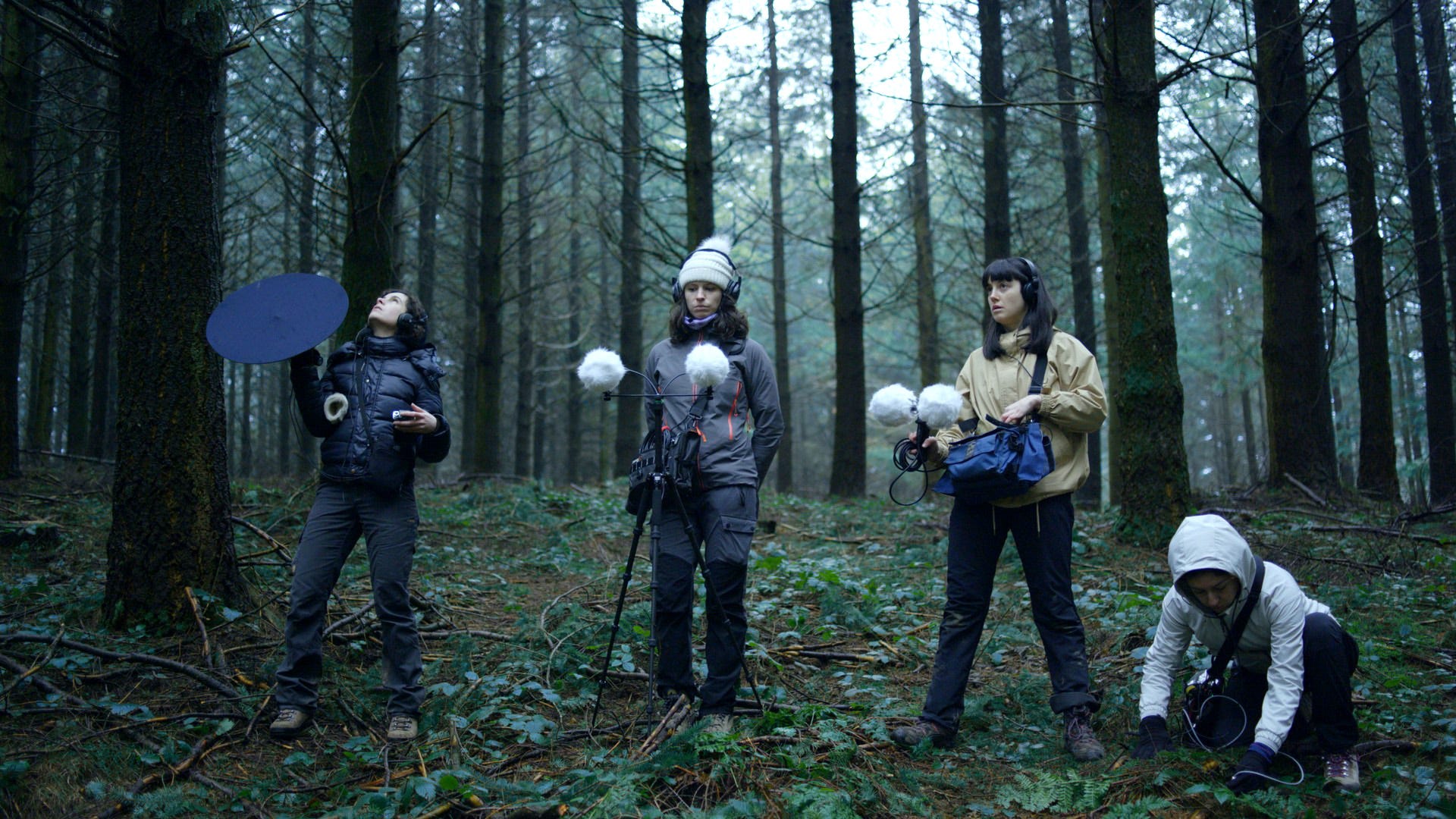
In this episode of Climate Cuts, host Akosua Owusu-Akyaw speaks with Mélia Roger the director of Dear Phonocene (2024) about the filming process, her inspiration, and the auditory experience of nature.
Mélia Roger comes from a sound engineering background and has collaborated on various film projects for sound design and soundtracks. She spends her time working in the field as a wildlife field recordist and began using images to document her practice. She believes film can reveal the distance between sight and hearing, creating intimacy with characters and landscapes.
Dear Phonocene (2024) is her first produced short film, originally created as an installation with a complex and immersive sound diffusion, and later presented at the CFF in its film format. This project is part of a practice-based PhD between Le Fresnoy – Studio National des Arts Contemporains (France) and the University of Lille, where she explores the relationship between sound art and acoustic ecology.
Film Synopsis
Inspired by scientific ideas around acoustic enrichment. Dear Phonocene follows four women field recordists as they playback recordings in clear-cut landscapes. Through its slow, contemplative observation, the film speaks to the emotional weight of industrial logging and becomes a meditation on environmental damage, forest memory, and restoration.
Dear Phonocene was screened at the 2025 Climate Film Festival in New York City
Akosua: What sparked the initial idea for this film, and how did that inspiration evolve throughout the creative process?
Mélia: I first started making field recordings around my parents’ house, in the north of Lyon, France. They lived in the middle of large forest plantations, and for a while I kept thinking: “It’s strange, I’m in a forest, but it doesn’t sound like one.” This contrast between the vast hectares of Douglas fir plantations and the poverty of the soundscape was the starting point. I wanted to listen to these places and understand how their acoustic ecology works.
Over the years, I built a large archive of recordings from these areas, spending time contemplating and listening deeply. As I grew up, many of the forests where I had recorded were cut down, and I discovered a change in the soundscape after the clearings. Unexpected species started to appear in the aftermath and began inhabiting the newly formed urban-forest zones. These clear cuts completely transformed the landscape, creating a sensation of solastalgia, when you feel you’ve lost your home even though you haven’t moved. The project began from that feeling.
Field recording is often associated with men travelling far away to capture pristine soundscapes in remote areas. I wanted to ground my practice in this “post-natural” landscape, and invited other women field recordists to experiment with me. Together, we performed sonic actions, imagining a sound fiction where we could “reactivate” the past soundscapes of this place.
Akosua: Sound plays a crucial role in your film. How do you think auditory experiences can enhance our understanding of environmental issues and foster a deeper connection to nature?
Mélia: The film is entirely built on sound, without dialogue. The listener is immersed in our microphones, in our body movements and camera handling noises. All the sounds you would normally clean out of a soundtrack to preserve only the “natural” soundscapes are here fully present. They act as an affirmation of our presence in the landscape, us trying, loudly, to be silent and discreet.
The project addresses the concept of the Phonocene, a term described by Vinciane Despret in “Living as a Bird” (2019), borrowed from Donna Haraway, to describe a geological era in which humans give attention to sound and listening as a way to care for all voices.
In these post-natural forest plantations, we listen to non-human voices: black woodpeckers, tawny owls, European nightjars. You might not recognize which sound belongs to which species, but the sensation of their presence within this chaotic environment creates contrast. The film explores this act of amplified listening, where ambiguity grows between what is present and what is imagined.
Akosua: How did your background in sound art influence the way you approached the themes of restoration and memory in your film?
Mélia: My practice is deeply field-based. I think of the microphone as an instrument for creating fiction within the landscape, amplifying tiny details that might otherwise feel unreal. I’m fascinated by acoustic ecology, and by how sound can provide evidence in scientific research, especially in bioacoustics and ecoacoustics.
In recent years, scientists have been experimenting with what they call acoustic enrichment in coral reefs, playing recordings of healthy reefs in degraded areas. They discovered that sound helped bring back certain fish species, contributing to reef restoration. I was amazed that sound could have such power. Of course, this alone is not enough and must be paired with large-scale environmental actions on plastic, acidity, deep-sea mining, overfishing, and more.
Returning to the forests, I wanted to imagine a practice that could also restore clear-cut areas, bringing back the former sonic life of local species. Of course, this remains a speculative gesture, not a scientific experiment. The film invites us to dive into the sonic memory of this place and its industrial present.
Akosua: Were there any challenging moments during production, and how did you overcome them?
Mélia: It’s very difficult to film a sound practice. Field recording is a slow and often solitary process. I imagined the shoot as a kind of collaborative workshop, where the performers would explore the area with various microphones, recording from dawn to sunset, leaving drop rigs overnight, and so on.
With the Director of Photography, Charlotte Müller, we had to find a way for her to film this slow process, to capture frames within our group, moments of collective attention. I was lucky that Charlotte had a background in wildlife documentary; she had the patience for this kind of slow contemplation.
Still, image works much faster than sound, the rhythm of the frame is hard to align with the rhythm of listening. So it was our recordings that set the tempo. We listened for long moments together, always rolling. Charlotte moved among us, creating her own rhythm within ours, isolating one of us or framing us all together. This kind of choreography took time to find, but it became a beautiful way to collaborate.
Akosua: Dear Phonocene was first conceived as an installation. How is it different as a film?
Mélia: I edited the film with Melisa Liebenthal as a loop, our “beginning” was completely different from the film’s beginning. You can feel that circular sensation in the edit, as places and actions keep returning. This process of listening and playing back sounds works like a call and response, echoing through the piece.
In the installation, the soundtrack is mixed on both speakers and open headphones, with all playback sounds heard only through the headphones. It creates another way of reading the story, highlighting what remains and what might have been. The open headphones allow for this double soundscape, combining the sounds from the speakers with the “almost nothing” of the surrounding silence.
Sound art is challenging to distribute, especially with such an ambiguous form, between film and sound piece. I also appreciate the cinema version, because it merges all the sounds together, revealing the process of listening itself, embracing this speculative position of giving attention to the smallest movements in the trees.
Akosua: Where can people find you, and do you have any upcoming projects?
Mélia: This project is part of a practice-based PhD with Le Fresnoy – Studio National des Arts Contemporains and the University of Lille. My next project, a sound installation exploring the soundscapes of forests completely damaged by wildfires, will be presented in France in September 2026 at Le Fresnoy’s gallery.
In the meantime, I’m continuing to collaborate with scientists specialized in bioacoustics and ecoacoustics, creating bridges between our closely related practices.
You can follow my work on Instagram @meliarog or visit www.meliaroger.com.
Stay tuned for more episodes of Climate Cuts for conversations with filmmakers from the Climate Film Festival.
 | A guest post by
|